
A family caregiver’s guide to supporting older adults with cancer, dementia, Alzheimer’s, or increasing confusion at home
5 min read.
Caring for an older loved one is rarely simple.
For family caregivers supporting a loved one through cancer care while also noticing memory loss, confusion, dementia symptoms, or Alzheimer’s-related changes, the experience can feel complex and overwhelming.
Cancer care already brings appointments, treatment decisions, fatigue, medications, and emotional strain. Memory changes can make all of this harder. This can be especially difficult when the person receiving care has always valued independence and may not want to feel watched, corrected, or managed.
The good news is that support does not have to be complicated to be meaningful. Small routines, clear communication, and the right additional help at home can make the experience safer and calmer for everyone.
Why Cancer Care Can Be Harder With Memory Changes
Cancer care requires organization.
There may be appointments, instructions, medications, nutrition needs, rest schedules, symptom tracking, and follow-up calls. For someone with dementia, Alzheimer’s, mild cognitive impairment, or increasing confusion, these moving parts can quickly become difficult to manage.
Memory changes may affect the person’s ability to:
- Remember appointments
- Follow instructions
- Explain symptoms clearly
- Recognize changes in their body
- Take medications as prescribed
- Eat and drink regularly
- Understand why care is needed
- Accept help from family or caregivers
- Stay safe at home
This does not mean the person is being difficult. It means the brain is processing information differently.
Families may need to shift from expecting the person to “remember” to building routines and systems that make remembering less necessary.
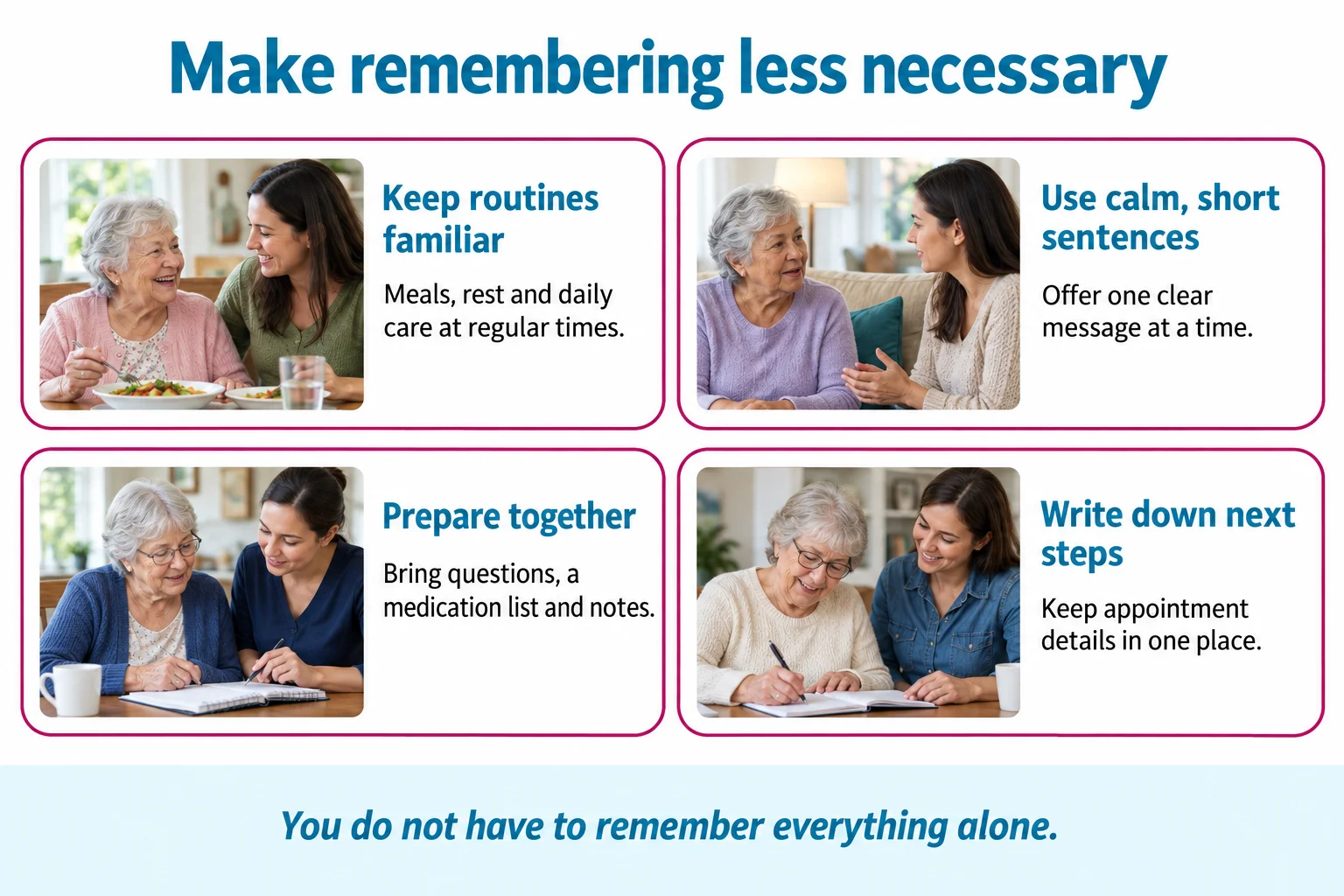
Cancer care can disrupt normal life, so the more consistent the home routine is, the better. Too many changes at once can increase anxiety. A simple daily structure helps the person feel more secure.
Families can support routine by keeping:
- Wake-up times consistent
- Meals at regular times
- Medications and reminders on a simple schedule
- Appointments written in one visible place
- Rest periods built into the day
- Personal care routines calm and unhurried
- Familiar objects nearby
Use Clear, Gentle Communication
When someone has memory changes, long explanations can become overwhelming. Try using short, calm sentences:
- “We are going to the doctor at 10.”
- “This appointment is to help us understand your treatment.”
- “It is time for lunch.”
- ”Your medication reminder is for the pills the doctor prescribed.”
- “I will come with you.”
Tone matters as much as words. Avoid arguing, correcting harshly, or saying, “I already told you that.” The person may not remember being told. Repeating yourself calmly is often more effective than trying to prove a point.
Prepare for Appointments in Advance
Medical appointments can be tiring for anyone. For someone with memory changes, they can be especially overwhelming. Families can make appointments easier by preparing ahead.
Helpful steps include:
- Writing down questions before the visit
- Bringing a list of current medications
- Bringing notes about symptoms or changes
- Asking the healthcare provider to explain instructions clearly
- Writing down next steps before leaving
- Confirming follow-up appointments
- Keeping all paperwork in one folder
If the person becomes anxious, it can help to say: “We are going together. You do not have to remember everything alone.” This protects dignity while still giving support. For many families, the goal is not to take over. It is to quietly become the second set of ears, notes, and reminders their loved one may need.
Watch for Changes That May Be Missed
An older adult with memory changes may not always report symptoms clearly.
They may not mention pain, appetite loss, dizziness, nausea, fatigue, or emotional distress. They may forget when a symptom started. They may minimize concerns because they do not want more appointments.
Families and caregivers can help by noticing patterns. The goal is not to diagnose at home. The goal is to notice changes early enough that the right professionals can help. The family caregiver can watch for and share the following with the healthcare team:
- Changes in appetite
- Weight changes
- New fatigue
- More confusion than usual
- Sleep disruption
- Mood changes
- Withdrawal from activities
- New pain behaviours, such as guarding or wincing
- Changes in walking or balance
- Trouble completing familiar tasks
Make the Home Easier to Navigate
Cancer care and memory changes can both increase safety risks. Fatigue, weakness, confusion, or dizziness can make falls more likely. A safer home setup can reduce stress and support independence. If wandering or confusion is a concern, families may also need additional safety planning. The goal is to make the home easier to understand, not to make it feel restrictive.
Consider:
- Clear walking paths
- Night lights in hallways and bathrooms
- Labels on important cabinets or rooms
- Non-slip mats
- Grab bars where appropriate
- Easy access to water
- A visible calendar
- A simple medication reminder system
- A comfortable rest area
- Emergency contacts posted clearly
Support Nutrition and Hydration
Cancer care may affect appetite, taste, digestion, or energy. Dementia, Alzheimer’s, or memory changes can also cause someone to forget to eat or drink. This combination can lead to weakness, dehydration, and more confusion. Families can help by offering:
- Small meals throughout the day
- Favourite familiar foods
- Soft or easy-to-eat options
- Protein-rich snacks
- Water within reach
- Soups, smoothies, or hydrating foods
- Gentle reminders to eat and drink
Mealtime companionship can also help. Many seniors eat better when they are not eating alone. If eating or drinking becomes difficult, families should speak with the healthcare team.
Support the Family Caregiver Too
When cancer care and memory changes overlap, family caregivers can become exhausted quickly. They may feel like they are always watching, reminding, driving, organizing, comforting, and troubleshooting. This is not easy. Caregiver burnout can build quietly, especially when family members feel they should be able to handle everything themselves. Signs of caregiver stress may include:
- Poor sleep
- Feeling constantly on edge
- Resentment or guilt
- Trouble concentrating
- Neglecting personal health
- Feeling emotionally numb
- Feeling alone in the responsibility
Respite care is not a luxury. It can be a necessary support that allows families to continue caring with patience and compassion.
A Note for Families and Caregivers
When cancer care and memory changes overlap, families need more than advice. They need practical support.
At TLC Nursing, our caregivers help families maintain safer, calmer routines at home. Support may include companionship, meal preparation, hydration reminders, personal care, mobility assistance, medication reminders, appointment support, and respite for family caregivers.
We do not replace doctors, nurses, or specialists. Instead, we help families follow care plans at home while protecting dignity, comfort, and consistency.
The bottom line? If you are a family caregiver, you do not have to manage every detail alone. With compassionate home support, older adults can feel safer, families can feel less overwhelmed, and each day can become a little more manageable.